Religion is not just a matter of doctrine or ritual—it is a pulse that runs through human history, a current that carries stories, traditions, and the longing of the human heart. It is the rhythm of prayer beads slipping through fingers, the sound of hymns echoing through old stone chapels, the muezzin’s call rising with the sun, the chant of monks reverberating through mountain temples, the sweet smoke of incense curling into the air.
Religion shows up in the most ordinary moments. It is there in the pause before we eat, when hands fold and gratitude is whispered. It is in the way a grandmother hums a hymn while stirring a pot of soup, the way a community gathers to celebrate a birth or mourn a loss. It is in the laughter of festivals, the quiet of sacred days, the stillness of meditation.
It is both public and intimate, shared and personal—a bridge between the individual and the infinite.
One Song, Many Voices
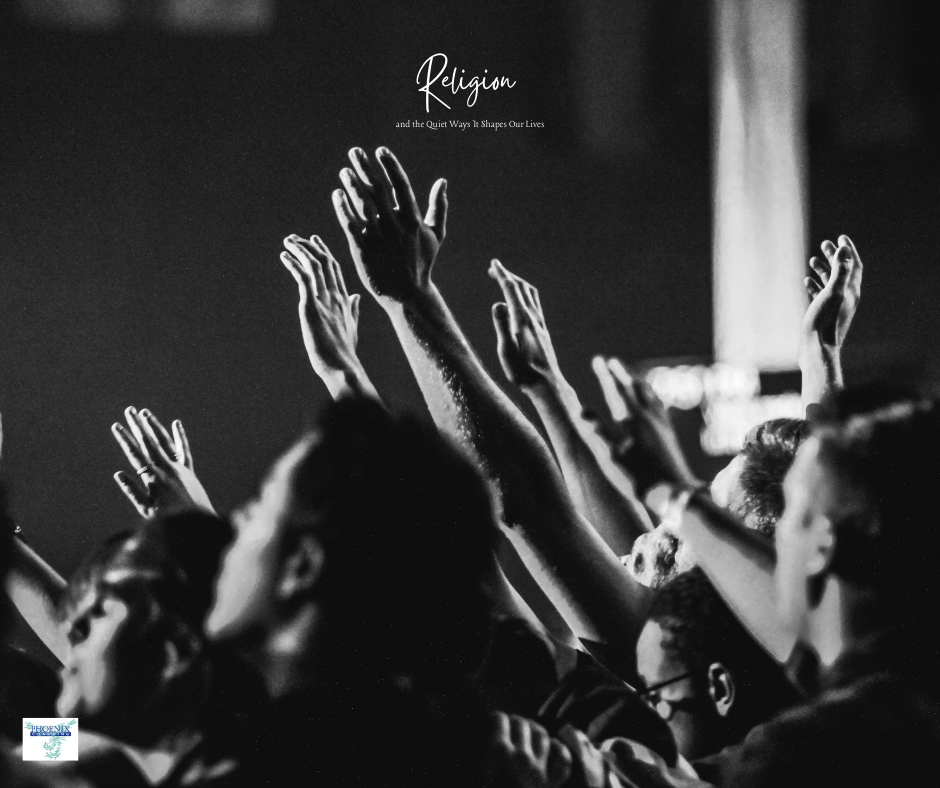
Though religions may speak different languages, their echoes often converge. At the heart of every tradition is a question: What does it mean to be human, and how do we live in a world that is both beautiful and broken?
A Christian may find solace in the words of Jesus: “Come to me, all who are weary.”
A Muslim may bow in prayer five times a day, aligning body and soul with divine rhythm.
A Hindu may look to the Bhagavad Gita and hear the eternal dialogue between duty and devotion.
A Buddhist may find refuge in the breath, a reminder of impermanence and presence.
A Jew may trace resilience through prayers carried across centuries of exile and return.
An Indigenous elder may speak of the land not as property, but as kin, alive and holy.
And those without a formal faith may find the sacred in the laughter of children, the wonder of the stars, the miracle of love.
The languages differ, the rituals vary, yet beneath them is a shared melody: longing for meaning, for belonging, for something greater than ourselves.
The Double-Edged Flame
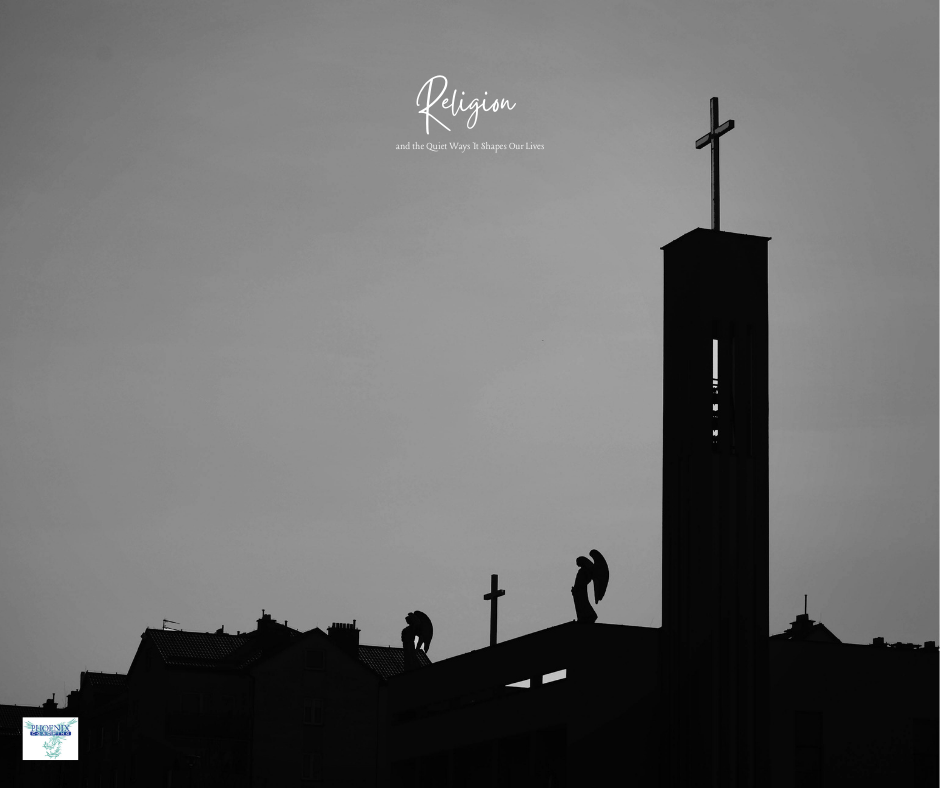
Religion can be the warm fire that gathers us—or the flame that burns when misused.
It has lifted the oppressed, inspired revolutions, and sustained people through unimaginable suffering. Think of spirituals sung by enslaved people, turning sorrow into strength. Think of the hymns and chants that rose even in concentration camps, as voices defied despair.
And yet, religion has also divided. Wars have been fought in its name. Communities have been silenced under its weight. At its worst, religion becomes a cage, confining instead of freeing.
This paradox reminds us of something essential: faith is not about walls but about doors. Its true essence is not control, but compassion—not exclusion, but expansion.
Threads That Bind Us

Religion is sometimes inherited, carried in our blood like a story too old to forget. It comes in the language we speak, the festivals we celebrate, the names we are given at birth. For some, it is an anchor—unchanging, steady, grounding. For others, it is a question mark, a path that must be rediscovered or reimagined.
There are those who leave the traditions they were born into, seeking freedom in the vastness outside. Others return to their faith after years of wandering, finding that what once felt rigid now feels like home. Still others weave their own tapestry from many threads—borrowing from prayer, poetry, silence, and science.
Yet no matter the path, religion shapes us. It teaches us how to mark time, how to honor beginnings and endings, how to remember the ones who came before us. It lives in our art, our language, our rituals, our silence. It is less about what we believe, and more about how we live.
A Shared Pilgrimage
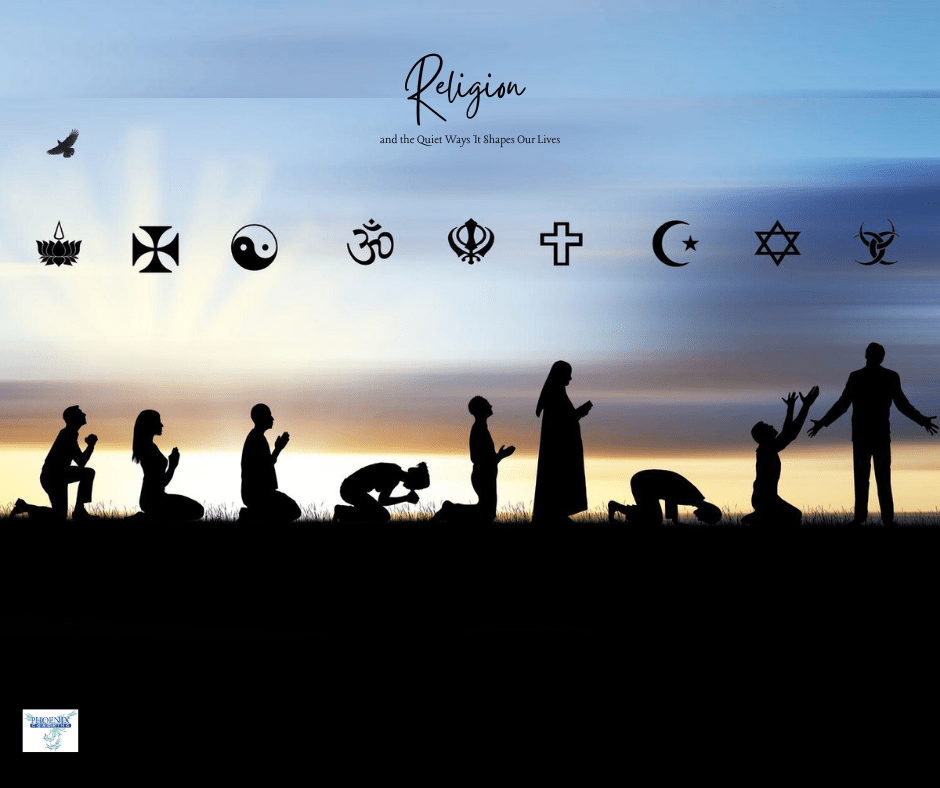
At the end of the day, all faiths whisper the same invitation:
To live with a heart that is awake.
To see one another not as strangers, but as kin.
To recognize that we belong not just to ourselves, but to each other—and to something vast, tender, and holy.
Religion, in its truest form, does not divide but reminds us of our shared humanity. It reminds us that no matter where we are born, what language we speak, or what name we give the Divine, we are walking the same road.
And perhaps that is the greatest truth religion offers: the assurance that we are not walking alone.
Closing Reflection
Religion, at its core, is less about walls that divide and more about windows that open. It asks us to see beyond ourselves, to listen to the songs of other traditions, and to honor the threads of wisdom carried through generations.
Whether we pray in temples, churches, mosques, under open skies—or whether we find holiness in love, art, or silence—we are part of the same pilgrimage: to love more deeply, to seek more truthfully, and to walk each other home.


Leave a Reply