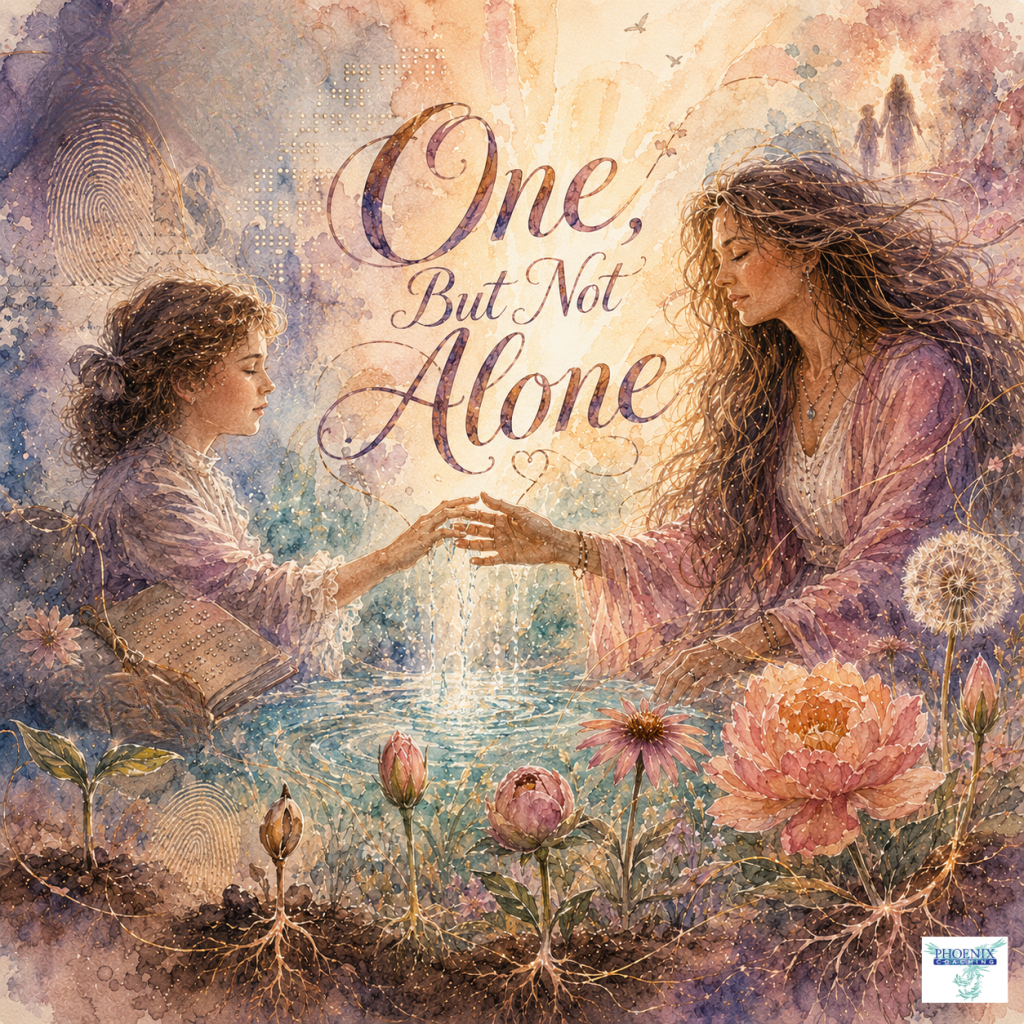
“I am only one, but still I am one. I cannot do everything, but still I can do something; and because I cannot do everything, I will not refuse to do the something that I can do.”
— Helen Keller
There is something profoundly beautiful about those words.
Not because they promise greatness.
Not because they promise that life will be easy.
But because they remind us that significance has never depended on being able to do everything. It has always depended on faithfully doing the little we can.
The world has a curious way of measuring people. We celebrate those who move the fastest, climb the highest, earn the most, and seem capable of doing it all. We admire strength, independence, and productivity. Yet in doing so, we often overlook the quiet courage of people whose victories are invisible.
Perhaps no one understood this better than Helen Keller.
When she was only eighteen months old, an illness stole both her sight and hearing. Imagine living in a world without sound or light—a world where words had no meaning and communication felt impossible. For years she lived in silence until Annie Sullivan entered her life. Nearly blind herself, Annie saw not a hopeless child, but limitless potential waiting to be awakened.
With extraordinary patience, she placed language into Helen’s fingertips.
Water.
One simple word.
One ordinary moment.
One life forever changed.

From that day forward, Helen Keller refused to let the world define her by what she lacked. She became the first deaf-blind woman to graduate from college, earning a degree from Radcliffe College. She wrote books. She traveled the world. She stood before audiences she could neither see nor hear and became one of history’s greatest advocates for people living with disabilities.
She touched the world without ever seeing it.
She listened with her heart instead of her ears.
And with her fingertips, she left fingerprints on history.
Her life reminds us that our greatest limitations are not always the ones people can see.

Helen Keller’s story has always spoken to me, though I didn’t realize how deeply our stories would one day intersect.
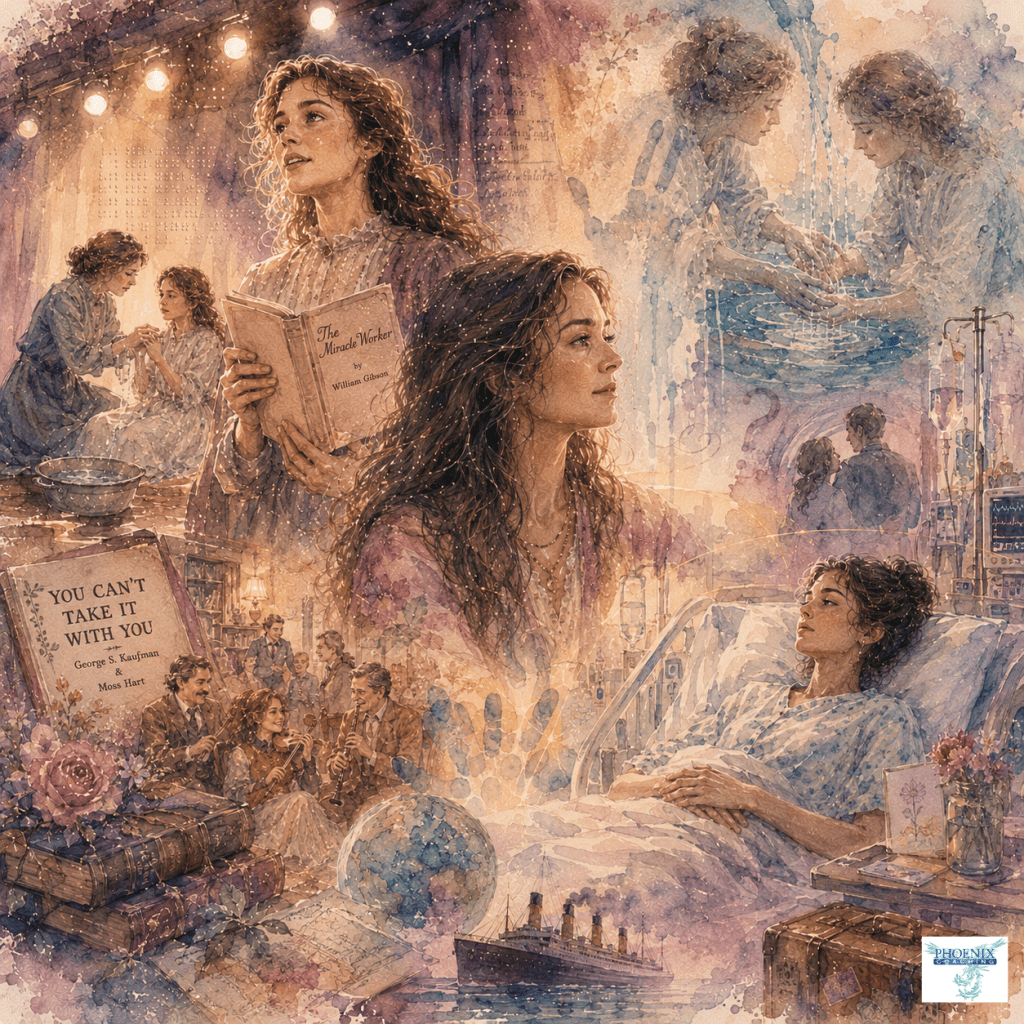
Long before my accident, I studied acting in high school, and my drama teacher considered me his star pupil. Hoping to challenge myself and showcase my abilities, I suggested that our class perform The Miracle Worker, the inspiring story of Helen Keller and her devoted teacher, Annie Sullivan. Ironically, I wanted to play the young Helen Keller. At the time, I simply saw it as a remarkable role. I had no way of knowing that years later, disability would become part of my own story.
My teacher chose a different play instead—You Can’t Take It with You, a beloved comedy centered on death, legacy, and the reminder that when our lives are over, none of our possessions or accomplishments can follow us. Its message is that the true measure of a life is found in joy, love, and the people we cherish—not in what we accumulate. Looking back now, I can’t help but marvel at the irony. I performed in a play about death, yet years later I would survive my own suicide attempt. The play I had longed to perform, The Miracle Worker, became the story I would actually live. I never portrayed Helen Keller on stage because I didn’t become blind or deaf—I became physically disabled. That was the role life reserved for me instead. The story I wasn’t allowed to perform became the story I was destined to understand from the inside. Sometimes the greatest irony is that life writes a far more powerful script than we ever could.
After my accident, no one knew if I would ever walk again.
One moment, life was familiar.
The next, I was lying in a hospital bed surrounded by uncertainty.
Every conversation seemed to begin with the same unanswered question.
“Will she ever walk?”
No one knew.
Not the doctors.
Not my family.
Not even me.
While I was still in the hospital, another heartbreaking story dominated the news.
Christopher Reeve—the actor millions knew as Superman—had fallen from his horse during an equestrian competition and was left paralyzed.
I remember feeling stunned.
I had fallen nearly fifty feet.
He had fallen from a horse.
Yet his injuries were far more devastating than mine.
Life, I realized, doesn’t measure tragedy by the height of the fall.
Sometimes a shorter fall leaves deeper wounds.
Instead of asking, “Why did this happen to me?” I found myself overwhelmed with gratitude.
Not because I wasn’t injured.
I was.
Not because rehabilitation would be easy.
It certainly wasn’t.
But because I still had possibilities that many others, including Christopher Reeve, would never have. Chris was surrounded by extraordinary love—his devoted wife, Dana, who famously reminded him, “You’re still you,” his son Will, whose unwavering pride gave him purpose, loyal friends like Robin Williams who stood beside him through the darkest days, and a community that rallied around him with remarkable compassion. Yet despite all of that love and support, there were physical freedoms his body could never regain.
I realized I still had some of those freedoms.
That realization has stayed with me ever since. It taught me that gratitude isn’t about denying what you’ve lost. It’s about recognizing what remains—and choosing to build a life with the gifts that are still yours.
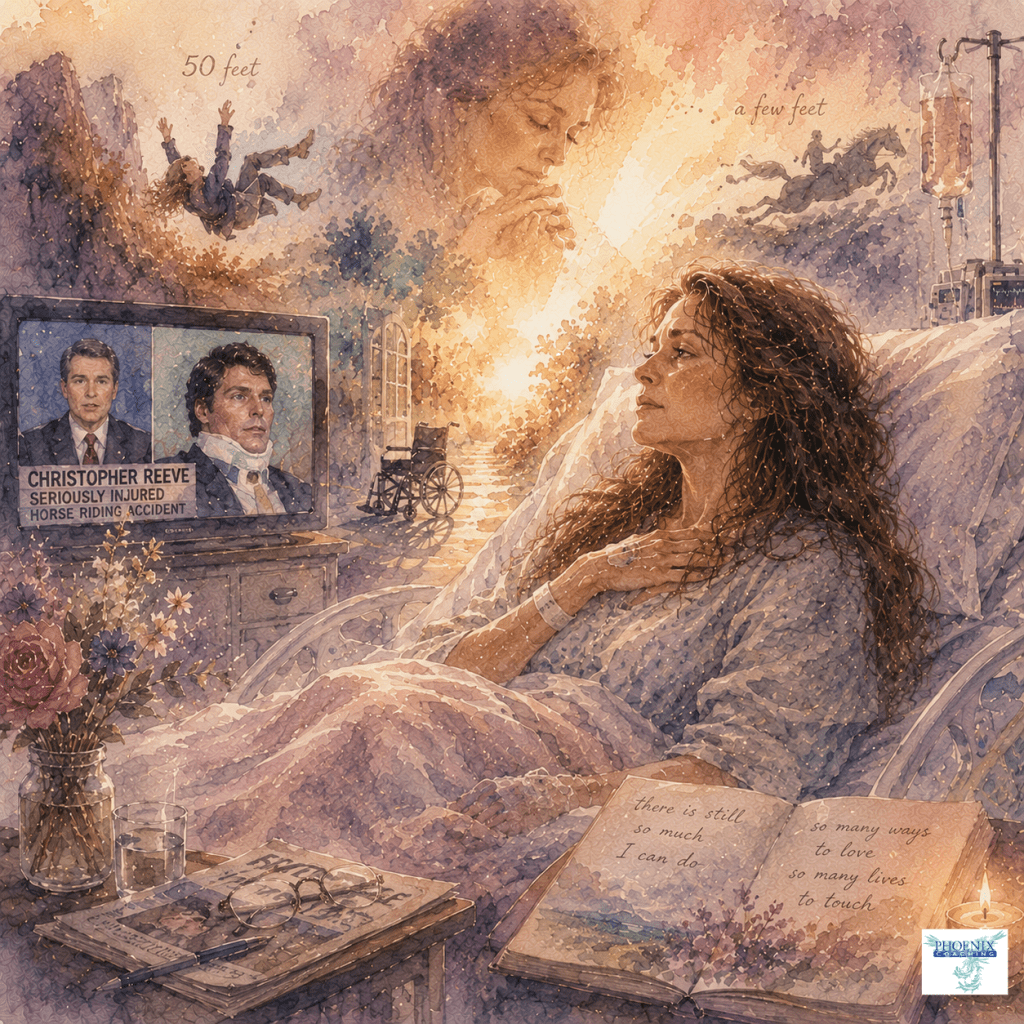
As I continued my own recovery, I read Christopher Reeve’s memoir, Still Me. The title has always stayed with me because of the story behind it. Shortly after his accident, Christopher told his wife, Dana, that he was useless and that she should leave him. Instead, she kissed him, cried, and simply said, “But you’re still you.” She stayed. Those three words became the title of his memoir.
I love that title because it carries two beautiful meanings. Physically, Christopher’s body had become “still,” unable to move. Yet despite everything that had changed, the person he was—his heart, his courage, his purpose—remained untouched. He was still Christopher Reeve. Still Me. It’s a reminder that our identity is never defined by what our bodies can or cannot do.
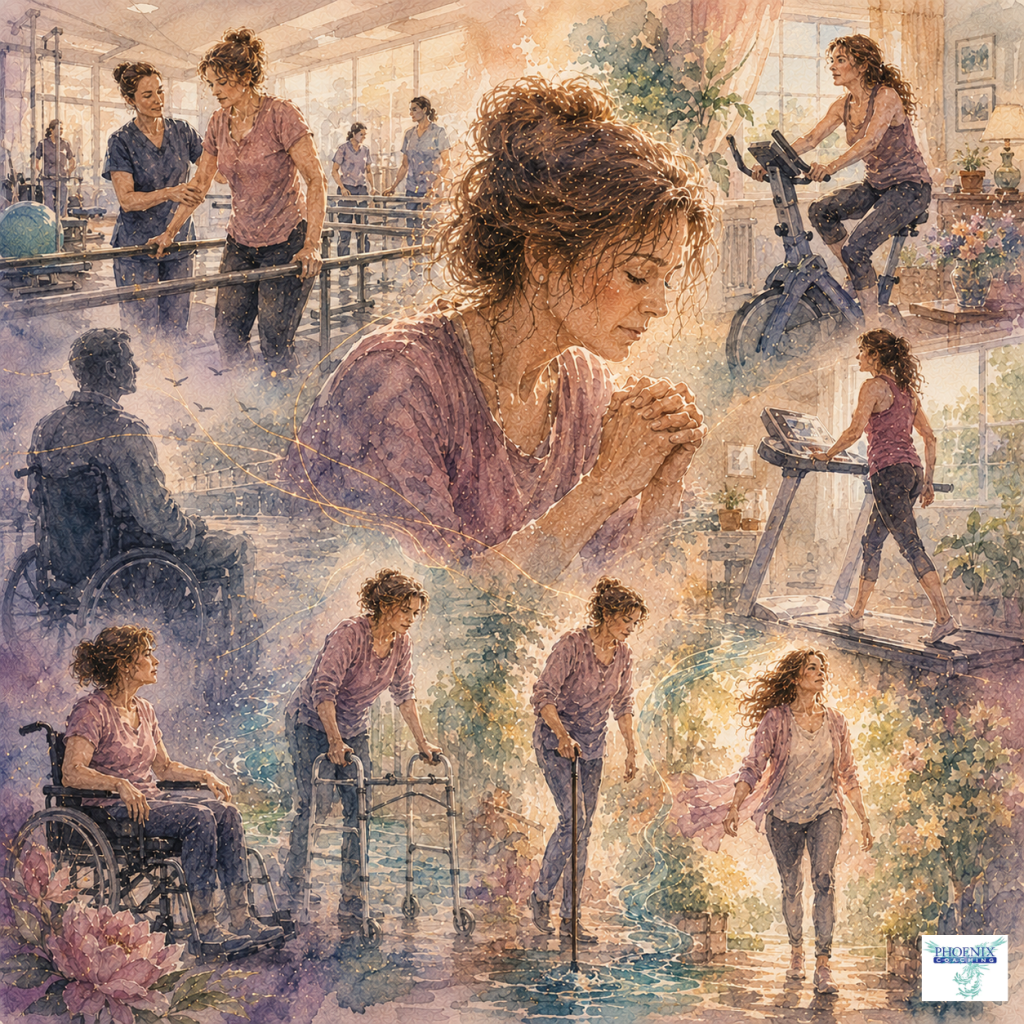
When I was discharged from the rehabilitation center, a neighbor suggested a gym run by physical therapists.
So I went.
Every day.
Three hours a day.
Without exception.
When I returned home, my parents had bought me a treadmill and a stationary bike, so after finishing therapy, I kept going. Another hour. Sometimes two.
Not because anyone expected me to.
Not because anyone was watching.
But because every tiny movement felt like a quiet declaration of hope.
Every painful step whispered,
“Not today.”
Little by little, my world began to change.
The wheelchair became a walker.
The walker became a cane.
The cane eventually became unnecessary.
Each milestone seemed so small when viewed on its own.
But together, they became a miracle built one ordinary day at a time.
People often tell me how fortunate I was to recover.
They’re right.
I was fortunate.
But I was also willing to fight for every inch of progress.
And yet…
That journey also taught me something equally important.
Not everyone is given the same opportunity to recover.
Not every disability can be overcome through determination alone.
Christopher Reeve devoted the rest of his life to spinal cord research, raising millions of dollars and inspiring countless people around the world. His courage never failed him.
His body simply could not do what mine eventually could.
That truth changed how I see people forever.
Too often, we judge lives we don’t understand.
We look at someone receiving disability benefits and quietly assume they don’t want to work.
We see someone leaving a job and imagine they simply didn’t try hard enough.
We forget that disability doesn’t always announce itself with a wheelchair or a white cane.
Sometimes it looks like chronic pain.
Sometimes overwhelming fatigue.
Sometimes nerve damage.
Sometimes the invisible exhaustion of simply surviving another day.
For some people, sitting at a desk for eight hours is effortless.
For others, it is impossible.
Pain doesn’t disappear because the rent is due.
There are battles no amount of willpower can win.
And perhaps that is why compassion matters so deeply.
We are rarely seeing the whole story.
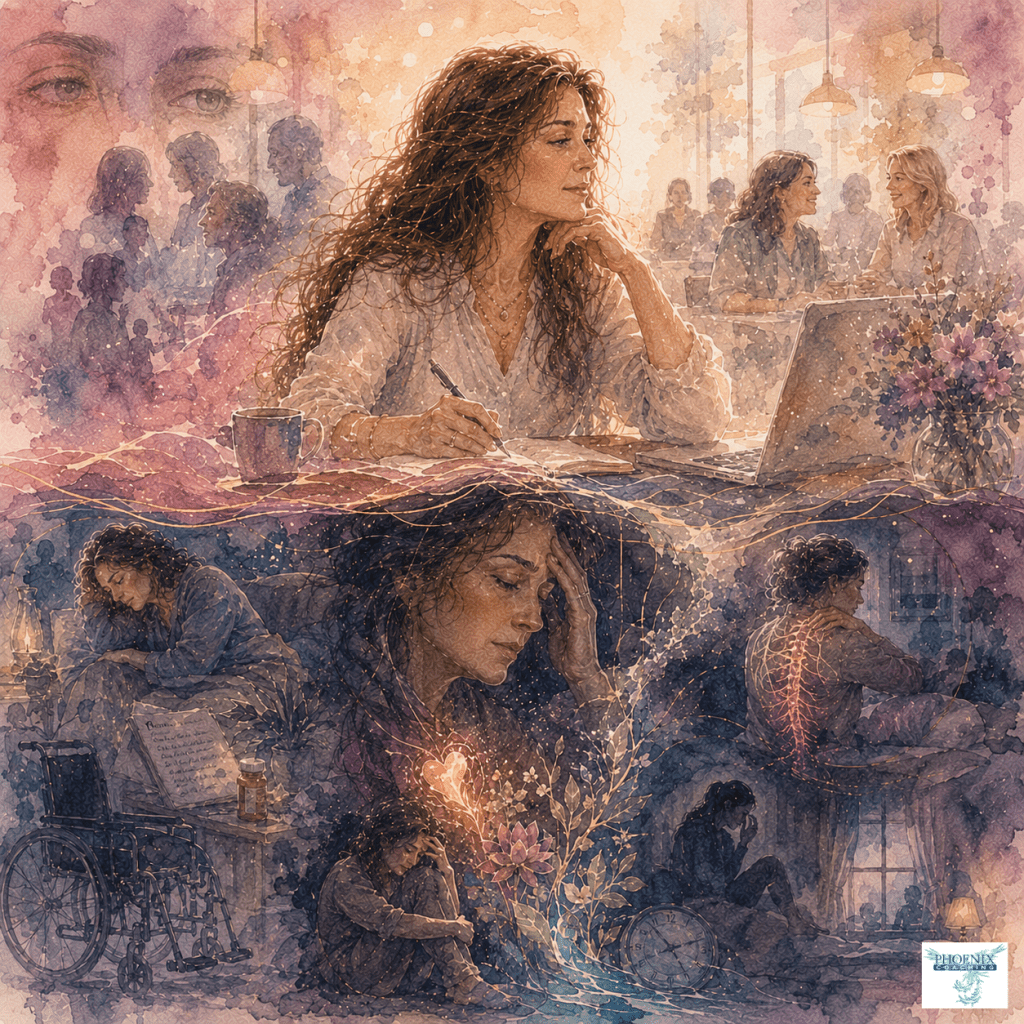
Helen Keller understood this.
Christopher Reeve understood it.
Millions of people living with disabilities understand it every single day.
The measure of a life has never been found in everything we accomplish.
It is found in the love we give, the courage we choose, and the small acts of faithfulness we continue offering, even when life becomes unimaginably difficult.
There is a lyric in Whitney Houston’s One Moment in Time that has always lingered in my heart:
“I’m only one… but not alone.”
What a beautiful reminder.
Helen had Annie Sullivan.
Later, she had Polly Thomson.
Christopher Reeve had a community that carried his mission forward.
I had doctors, physical therapists, faithful parents, and people who refused to let me quit before I believed in myself.
None of us reaches healing alone.
And maybe that is exactly how life was meant to be.
We each carry one another when someone else’s strength begins to fail.
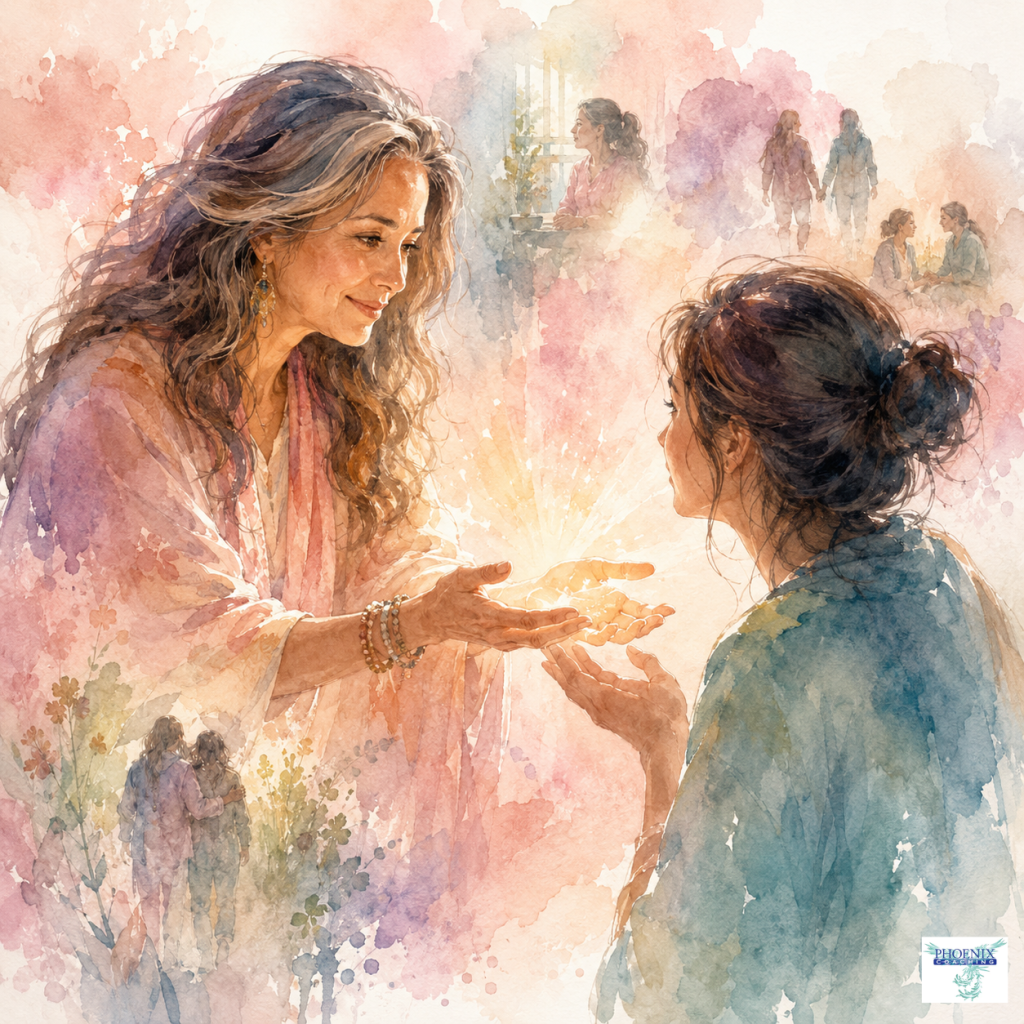
So if today you find yourself measuring your worth by everything you can no longer do, I hope you’ll remember Helen Keller.
I hope you’ll remember Christopher Reeve.
I hope you’ll remember that frightened young woman who spent hours each day learning how to walk again—not because she was guaranteed success, but because hope was worth the effort.
Most of all, I hope you’ll remember this:
You were never created to do everything.
None of us were.
You were simply created to do the beautiful “something” that only you can do.
And perhaps that one faithful act…
that one kind word…
that one courageous step…
will become the very thing that changes someone else’s life.
After all…
you are only one.
But still…
you are one.


Leave a Reply